Which level of enclosure are you planning?
Each level changes the foundation, the roof and the permit.
No votes yet. Yours will be the first. · saved on this device
Loading...
Porch Planbook · Polls
These polls ask the questions porch planners face: which level of enclosure, what the porch is for, how big, which roof, which screen mesh and floor, what budget, what they expect at resale and whether they have checked permits. Vote to see how other planners on this site split.
Go to the pollsEvery poll below is answered by visitors planning porch design and renovation. Results update the moment you vote, one vote per poll per browser, and your own choices stay highlighted so you can compare them with everyone else's. Nothing here is a sales survey; use it to see which trade-offs other homeowners are weighing before you request estimates.
16 polls · newly opened, so every vote shapes the first results · results saved on this device. Vote on any poll you have not answered; your own votes are highlighted.
Each level changes the foundation, the roof and the permit.
No votes yet. Yours will be the first. · saved on this device
No votes yet. Yours will be the first. · saved on this device
No votes yet. Yours will be the first. · saved on this device
No votes yet. Yours will be the first. · saved on this device
No votes yet. Yours will be the first. · saved on this device
The tie-in to the house is where the roof budget goes.
No votes yet. Yours will be the first. · saved on this device
No votes yet. Yours will be the first. · saved on this device
No votes yet. Yours will be the first. · saved on this device
No votes yet. Yours will be the first. · saved on this device
No votes yet. Yours will be the first. · saved on this device
No votes yet. Yours will be the first. · saved on this device
No votes yet. Yours will be the first. · saved on this device
No votes yet. Yours will be the first. · saved on this device
No votes yet. Yours will be the first. · saved on this device
No votes yet. Yours will be the first. · saved on this device
No votes yet. Yours will be the first. · saved on this device
By the numbers
Poll results above are from visitors to this site; these figures come from published research.
14%
of 2026 outdoor remodels include a screened-in porch, up 2 points from 2024 (Houzz, 1,191 U.S. homeowners)
Shade structures jumped 15 points to 35% in the same study, showing homeowners want covered, protected outdoor rooms. Screened porches are the fully enclosed end of that trend; the figure is a survey of Houzz users, not a national count.
Houzz, 2026 U.S. Houzz Outdoor Trends Study (magazine summary) (2026)671,000
new single-family homes completed with a porch in 2025 (U.S. Census Bureau)
Of all new single-family houses completed in 2025, 671,000 included a porch, up from 621,000 in 2021 and just below the 2024 figure of 696,000. This counts new construction only, not porches added to existing homes, and Census rounds the figures.
U.S. Census Bureau, Characteristics of New Housing: Outdoor Features (2025)87%
of homeowners believe outdoor upgrades increase resale value (Talker Research for Trex, 2025)
The Talker Research survey of 2,000 U.S. homeowners, fielded April 2025, also found 67% plan to spend more time outdoors and that outdoor time rose 22% to 11.7 hours a week. Average planned renovation budget was $13,321.
Talker Research for Trex Company, Backyard Sanctuaries survey (2025)85%
of U.S. households have some outdoor space, yet 77% say they underuse it (ICFA, 2025)
42% blame the hassle of cleaning and caring for outdoor furnishings and 34% are unsure what they want, in a January 2025 survey of 1,000 U.S. adults. A screened or covered porch keeps furniture cleaner and extends the usable season.
International Casual Furnishings Association (ICFA), 2025 consumer research on porch and patio living (2025)Seeing how other people facing the same porch decision are leaning makes the decision easier to think about, even when you decide differently. The polls below are grouped by the site's themes: enclosure level, entry and curb appeal, comfort and seasons, budget and value, and hiring and permits. Each has neutral options and one vote per poll.
The results are a snapshot of planners who visited this site. For the market, Houzz's 2026 study reports screened porches in 14% of outdoor remodels, our count of Census new-home data puts new homes completed with a porch in 2025 at 671,000, and the Trex survey found 87% of homeowners believe outdoor upgrades raise resale value. The polls show what planners choose within that.
Calibration first: if most planners are budgeting $15,000 to $30,000 and you are at $8,000, the calculator shows what that buys and the poll shows you are not alone in stretching. Priorities second: seeing that many planners rank the roof connection as their top worry is a prompt to ask about flashing in the brief. Honesty third: the enclosure poll splits, which is the point; a screened porch and a sunroom are both right for different households, and the compare pages say which.
The polls are not used to rank builders or to make any claim about the market. They are a conversation among planners. The ICFA's 2025 research found 85% of households have outdoor space and 77 percent underuse it; the season-of-use poll is partly about what would change that.
Enclosure polls connect to the services overview and the screened-porch-versus-sunroom comparison. Entry polls connect to the front porch page and the curb-appeal data on the home page. Comfort polls connect to the screened porch and sunroom pages and the regional notes. Budget polls connect to the calculator and the resale figures. Hiring polls connect to the reviews page and the project brief.
A poll that splits evenly usually means the answer depends on the house; the compare page for that pair is the next stop. A poll with a strong majority usually reflects experience, and its majority answer belongs in your brief as a question. Vote in the polls that fit your project and skip the rest; if one you need is missing, the contact page is where to suggest it.
The enclosure poll is the one to read against your own vote. If you chose a screened porch with the majority, the next check is bug season and sun exposure on your wall, since a screened porch is usable only when the air is; Lawn Love's $2,085 average to screen an existing 200-square-foot porch is the cheap test of whether you would sit out there. If you chose a three-season or four-season room against the majority, the resale poll matters more: HomeAdvisor's 49% recovery means the room has to earn its keep in use, and the budget poll shows whether others at your figure chose the same.
Cross-read the polls in pairs. A main-goal vote for dining outdoors beside a four-season vote suggests paying for glass you will open most of the year, which the three-season-versus-four-season comparison addresses. A shelter-at-the-door vote beside a $30,000 budget suggests a stoop at Fixr's $4,000 to $10,000 or a portico up to $20,000 would leave money for steps and a door, where Zonda reports 216.4% on a steel entry door. Where the polls and your house disagree, the house wins; where they agree, put the choice in the brief as a decision rather than a question and ask the builder to price it.
Yes, one vote per poll. Answer the ones relevant to your project; there is no need to complete all of them. Results update as votes arrive and are shown after you vote so the current split does not influence your answer.
No. They are not cited as statistics, not used to rank or match builders and not presented as research. The site's statistics come from named, linked sources such as HomeAdvisor, Houzz, NAR, Zonda, the Census Bureau and the EIA, each with its year and sample described.
So the poll measures the decision rather than the wording. Each option is neutral and does not overlap with the others, which keeps the split honest. Where a decision has more than six reasonable answers, the poll lists the most common and the service and compare pages cover the rest.
No. A majority choosing a screened porch does not make it right for a household that wants a room in February, and a majority choosing gable roofs does not make one fit under a one-story eave. Use the polls to see where you sit, the compare pages and quiz to decide, and a matched builder's visit to settle the site questions.
Results appear after a vote in each poll so the split does not steer the answer. Vote honestly for your situation; the value of the polls to every planner depends on that.
As planners' questions shift. The sunroom conditioning and permit polls were added because those questions kept arriving through the contact page. If a decision you are facing is missing, mention it in your brief; the ones that recur become polls.
Votes are recorded as counts per option and are not tied to a name or a brief. The polls exist to show how planners split, not to profile anyone. A project brief, if you send one, is handled separately as the contact page describes.
 Free toolPorch cost calculator
Size, material tier and complexity in, a realistic budget range out.
 Free toolCompare porch options, row by row
Side-by-side tables for the decisions that change the price most.
 Free toolPorch planning quiz
9 questions that show what you already know and what to check next.
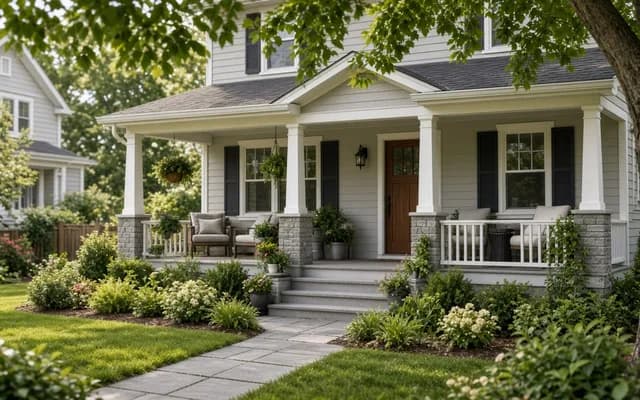 Service guideFront Porch Design & Build
Front porch design and build covers a new or rebuilt covered porch at the entry: footings, floor, columns, roof tied into the house, steps, railings and lighting.
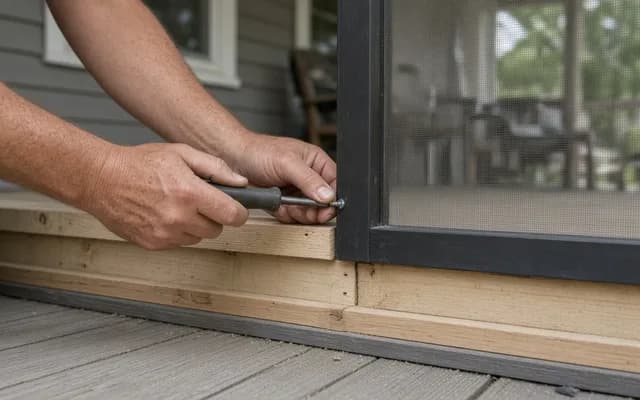 Service guideScreened Porch Construction
Screened porch construction covers either screening an existing covered porch or building a new roofed, screened, unconditioned room: structure, screen panels or a screen system, a screen door, floor and roof details, and electrical.
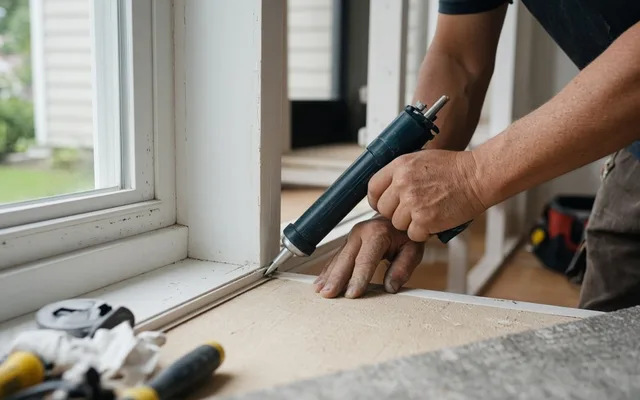 Service guideSunroom Additions
A sunroom addition is an enclosed, glazed room attached to the house, built either as a three-season room that is closed but unconditioned or a four-season room with an insulated foundation, thermal glass and heating and cooling that counts as living space.
Tell us the size, the condition of what is there now, and what you want to change. Porch Planbook passes your request to independent local professionals, who reply with written, no-obligation estimates. The service is free to use.